
Sanctions check
How to check an address against the OFAC SDN list, what the result means and what it does not show.
Esta sección aún no está traducida a tu idioma, por eso se muestra en inglés.
OFAC, part of the US Treasury, keeps the SDN sanctions list, which includes crypto addresses. Exchanges and services block them, and dealing with them can be illegal for US persons. The sanctions check tells you whether an address is on that list.
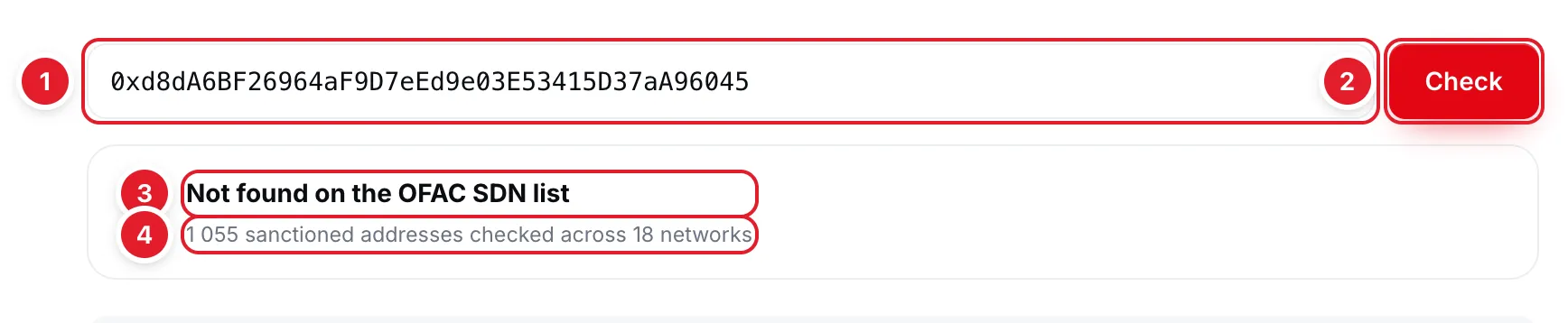
- AddressPaste a wallet address: bitcoin, Ethereum and EVM networks, TRON, Solana, Litecoin and more, 18 networks and tokens in all. Ethereum addresses work in any letter case.
- CheckRuns the check. The answer usually comes in under a second.
- Result“Not found on the OFAC SDN list” if the address is not on the list. “This address is on the OFAC SDN sanctions list” if it is, with the networks or tokens it was listed for.
- How much was checkedHow many sanctioned addresses, on how many networks, the list held at the time.
How it works
Every 12 hours our server downloads the OFAC SDN lists as parsed by the open 0xB10C project (ofac-sanctioned-digital-currency-addresses) and looks for an exact match.
What the check does not show
- Only the address itself is checked. If it received money from a sanctioned address, the check will not see that: such analysis needs services like Chainalysis or TRM.
- A clean result does not mean the address is safe: scam wallets are rarely on the OFAC list.
This is not legal advice. If a deal depends on the result, ask a lawyer or a compliance team.