Fed survey shows tighter bank lending to nonbanks, could curb Bitcoin demand
A Federal Reserve survey reveals net tightening of credit standards for nonbank borrowers, raising concerns that reduced financing could dampen Bitcoin investment appetite.

Data: Polymarket, updated every minute. · Ends Jan 1, 2028
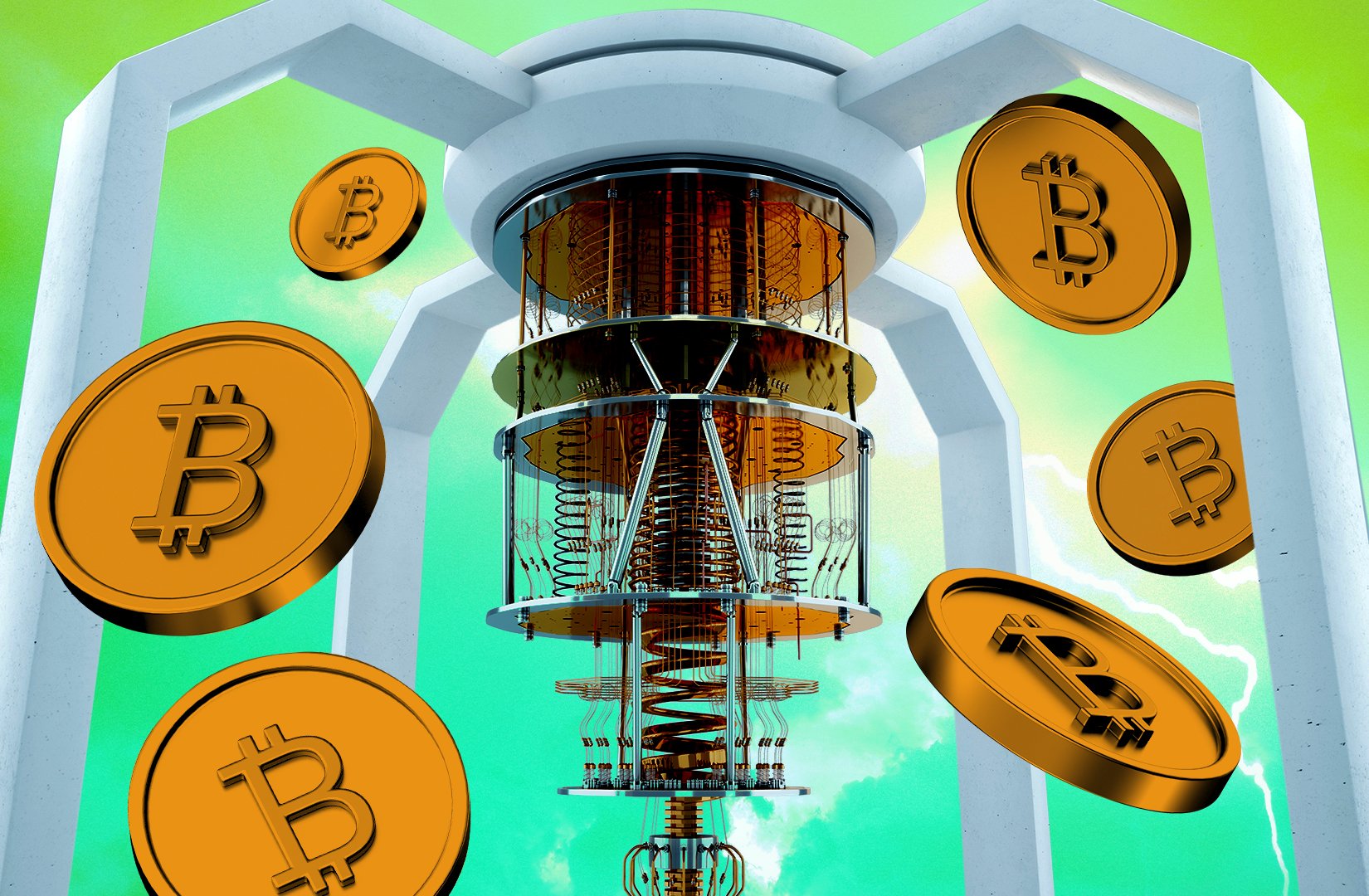
This market will resolve to "Yes" if, by 11:59 PM ET on the date specified, a quantum computer has been publicly demonstrated to derive a valid private key corresponding to an existing Bitcoin address using a quantum algorithm, such that the derived key is sufficient to sign a valid transaction on the Bitcoin mainnet. Otherwise, this market will resolve to “No.”
To qualify, the demonstration must satisfy all of the following:
The private key must be derived from a real Bitcoin address whose corresponding public key has been revealed on the Bitcoin blockchain (for example, via a prior transaction). The address must use standard Bitcoin cryptography with no artificial weakening or modification.
The target address must be reasonably believed not to be controlled by the demonstrator. This may be established through credible reporting, prior attribution (such as a known exchange or historical address), or broad consensus among experts.
The derivation must rely on a quantum computing method that provides a computational advantage for solving the elliptic curve discrete logarithm problem underlying Bitcoin’s ECDSA (e.g., Shor’s algorithm or a comparable quantum algorithm). Purely classical methods, side-channel attacks, or approaches where quantum computation does not play a material role in deriving the key do not qualify.
The derived private key must be shown to be valid by either signing and broadcasting a valid transaction from the target address on the Bitcoin mainnet, or by independent reproduction and confirmation by multiple credible third parties. The result must be widely accepted by the cryptographic research community as valid.
The resolution source will be a consensus of credible reporting.

A Federal Reserve survey reveals net tightening of credit standards for nonbank borrowers, raising concerns that reduced financing could dampen Bitcoin investment appetite.
October saw only 35 dormant Bitcoin transfers totaling 2,159 BTC, a sharp decline from August’s 188 moves, with 2013‑born wallets dominating the activity.
Ethereum co‑founder Vitalik Buterin cautioned that advanced AI might discover shortcuts to break the elliptic curve math protecting ETH and BTC, adding a new threat to the crypto security landscape.
It is the latest price of the Yes outcome. Traders pay that share of a dollar for a contract that pays $1 if the event happens, so the price reads as the market's estimate of the chance.
The market resolves by the rules below. Polymarket uses the UMA optimistic oracle: anyone can propose the outcome and dispute it during a challenge period.
Yes, where Polymarket is available. You connect your own wallet; the bet goes to Polymarket and the money never passes through COINMAG.
Markus Thielen of 10x Research argues that institutional option sellers and market makers are dampening Bitcoin’s explosive price moves, while still forecasting a year‑end target of $90,000.
Bitcoin fell to $76,861 amid falling Treasury yields, weak tech equities and record outflows from US spot Bitcoin ETFs, challenging a near‑term recovery.
October’s ISM production index rose to 59, its strongest reading since 2021, prompting mixed signals for Bitcoin as stronger growth may boost risk appetite while lingering price pressures keep rate‑cut hopes in doubt.