




Self‑Custody Explained: Why “Not Your Keys, Not Your Coins” Matters
Self‑custody lets you hold crypto private keys yourself, giving full control and responsibility over your assets.

COINMAG NewsroomNewsroom · via COINMAG
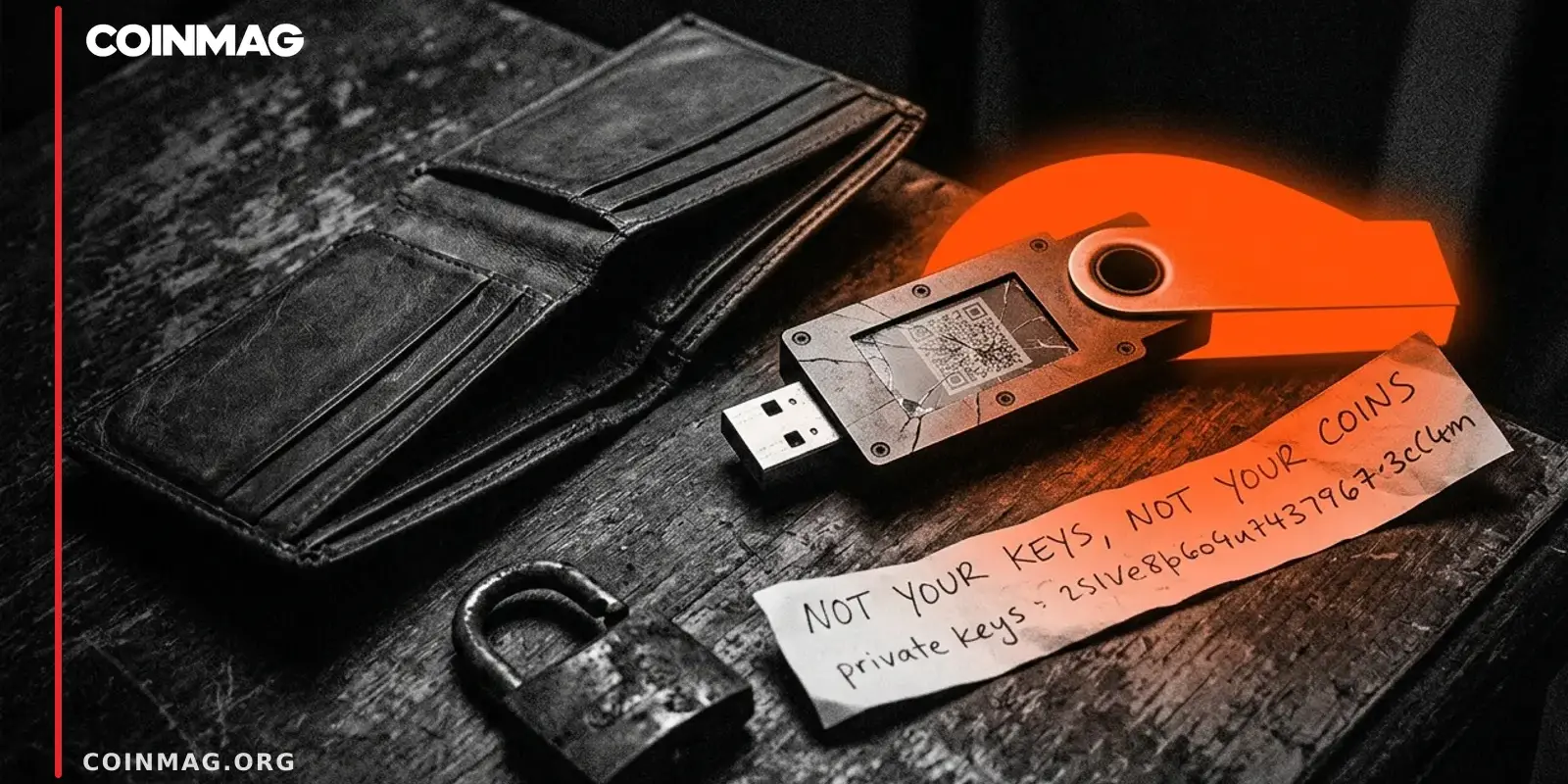
Key takeaways
- Self‑custody means you alone manage the private keys that grant access to your crypto.
- Holding your own keys eliminates reliance on third‑party exchanges, reducing counter‑party risk.
- The phrase “not your keys, not your coins” highlights that ownership is tied to control of private keys, not just the address balance.
What Is Self‑Custody?
In the world of cryptocurrency, ownership is proven by a private key – a cryptographic string that unlocks the funds stored at a public address. The private key is mathematically linked to a public address, but it cannot be derived from the address, making it the sole proof of control.
Self‑custody refers to the practice of storing that private key yourself, rather than trusting a third‑party service such as an exchange, custodial wallet, or DeFi platform. When you self‑custody, you become the sole gatekeeper of the key, and therefore the sole party able to move the coins.
This model mirrors traditional banking only in the sense that you hold an asset; it differs because there is no intermediary that can freeze, reverse, or otherwise intervene in a transaction once you sign it.
- Private key = proof of ownership
- Public address = where funds are received
- Self‑custody = you hold the private key
How Private Keys Work
When you create a wallet, a cryptographic algorithm generates a pair of keys: a public key (which is hashed into a public address) and a private key (kept secret). The public address can be shared with anyone who wants to send you crypto, while the private key must never leave your control.
A transaction is a data packet that tells the network to move a certain amount of cryptocurrency from your address to another. To be accepted, the transaction must be signed with the private key. The network verifies the signature using the corresponding public key, confirming that the sender is authorized without ever revealing the private key.
Because the private key is the only thing that can produce a valid signature, losing it is equivalent to losing the actual coins. Conversely, anyone who obtains the private key can instantly transfer the funds, which is why secure storage is paramount.
- Never share the private key; anyone with it can move the coins.
- The public address can be shared freely to receive payments.
Why “Not Your Keys, Not Your Coins” Became a Mantra
The phrase originated in early Bitcoin forums as a reminder that an exchange’s balance record does not equal true ownership. Exchanges keep a ledger of user balances, but the actual coins sit in the exchange’s hot and cold wallets, controlled by the exchange’s private keys.
If an exchange loses access to its hot wallet, freezes accounts, or goes bankrupt, users without their own keys may lose the assets displayed on the platform. The most infamous example is Mt. Gox, which filed for bankruptcy in 2014 after losing roughly 850,000 BTC that were stored in custodial wallets.
Coins in this story
Swap

Apps in this story
COINMAG NewsroomStories researched and written by the COINMAG news desk from multiple independent reports.




Discussion 0